Oxygen • Pressure • Healing science
Hyperbaric Oxygen Therapy
Oxygen plays a vital role in tissue repair. Hyperbaric therapy uses increased pressure to change how oxygen is delivered—with benefits that depend on the condition and the treatment.
A clearer understanding
More than sitting inside a chamber.
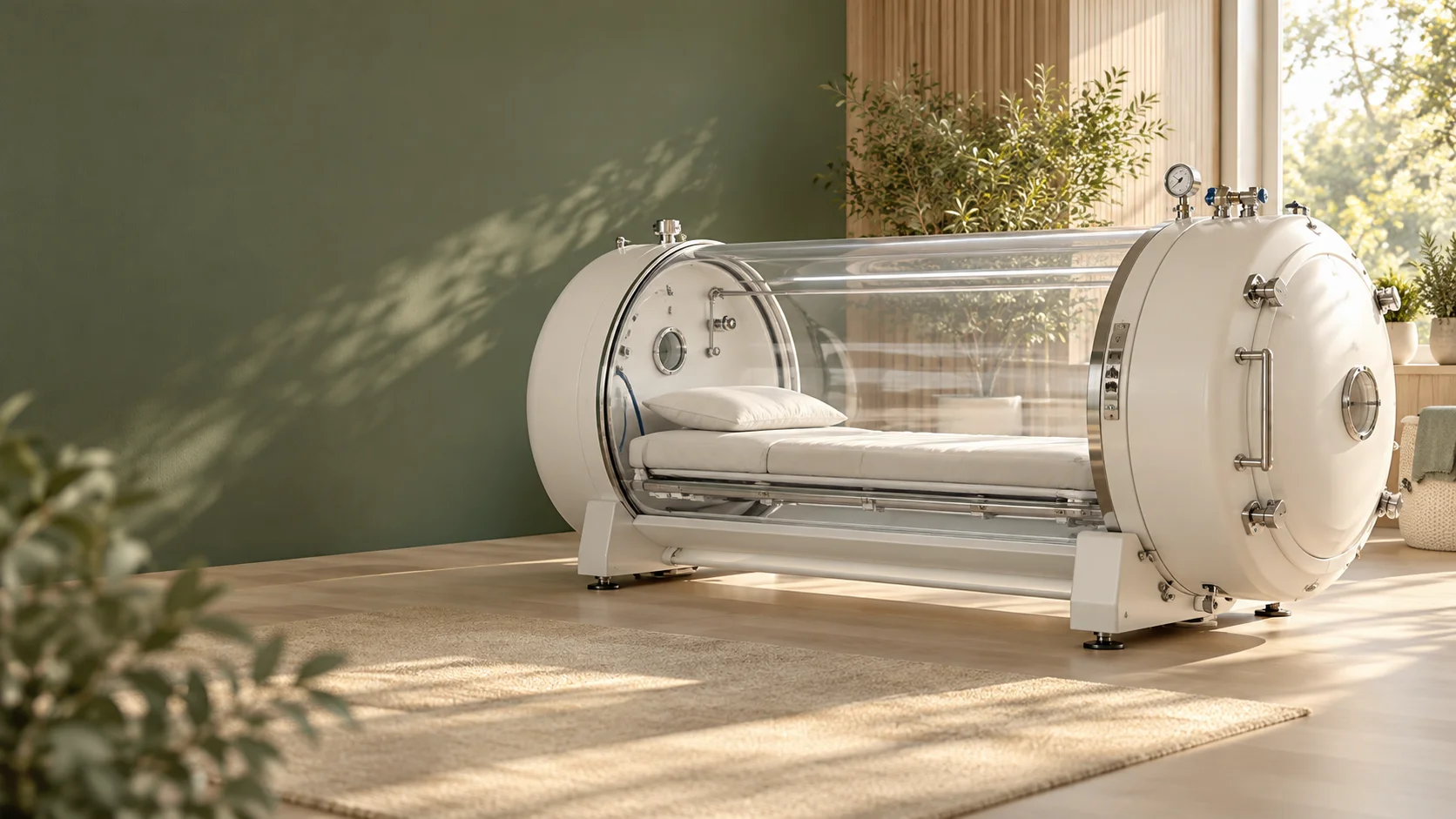
The word is hyperbaric: “hyper” means increased, and “baric” refers to pressure. Medical hyperbaric oxygen therapy, or HBOT, involves breathing concentrated oxygen in a specially designed pressurized chamber. Together, the pressure and oxygen increase the oxygen available to the body’s tissues.
That mechanism explains why HBOT has a place in selected medical care. It does not mean every pressurized chamber delivers the same treatment or that every condition will benefit.
Where the healing potential is established
Medical HBOT is used for specific conditions, including decompression sickness, carbon monoxide poisoning and selected difficult-to-heal wounds or radiation injuries. In these settings it may support healing alongside other necessary treatment.
Those uses involve a diagnosis and a defined medical protocol. Evidence from a hospital wound-care program should not be assumed to apply to a different chamber, pressure, oxygen supply or general wellness goal.
Pressure and oxygen both matter
A mild-pressure chamber using room air is not equivalent to a protocol that delivers concentrated oxygen at a higher pressure. Before comparing treatments, ask about the device, operating pressure, breathing gas, clinical purpose and supervising professional.
Well Within’s service information mentions hyperbaric chamber sessions. This guide explains the topic generally; the office should confirm its current equipment and protocol before you decide whether a session fits your needs.
- Which chamber and oxygen-delivery system are used?
- What evidence supports this exact protocol for my concern?
- What screening and supervision are provided?
- What would count as a useful response?
What to expect from a safety conversation
Changes in pressure can cause ear discomfort. A clinical team should review your health history, medications and suitability, explain how to equalize pressure and tell you how to communicate during treatment.
Oxygen-rich environments require strict fire precautions and trained supervision. Follow the facility’s instructions about clothing and prohibited items. Ask about the risks of pressure injury and oxygen exposure, as well as the expected number and length of sessions.
Your health. Your next step.
Let's talk about what
makes sense for you.
Your history, your goals and your questions belong in the conversation. The Well Within team can help you understand the next step and whether a clinical evaluation is appropriate.
Start a conversation Or call 469-400-4893Good questions deserve clear answers
Common questions
Is hyperbaric therapy the same as regular oxygen therapy?
No. Regular supplemental oxygen is delivered at normal surrounding pressure. HBOT combines an oxygen treatment with increased pressure inside a chamber.
Does a “mild” chamber have the same evidence as hospital HBOT?
No. The pressure, oxygen concentration, device and condition all matter. Results from one protocol cannot simply be transferred to another.
Can it improve general energy or reverse aging?
Those broad claims are not established benefits of every chamber session. Ask for evidence tied to the exact treatment and goal, rather than relying on the fact that cells use oxygen.
Sources & further reading
General education. Individual suitability requires a clinical evaluation. AI-generated editorial imagery illustrates the topic; it does not show the clinic's actual staff, equipment or patient results.
A connected approach to your health